

The Horse is not a mirror
Calling a horse a mirror implies passivity, a surface that reflects. But the horse's active agency, its discernment, its choice to engage or disengage, is what makes the encounter generative.
This is the scientific and ethical foundation of every Unbridled Rising program.
-

Bioenergetic resononance
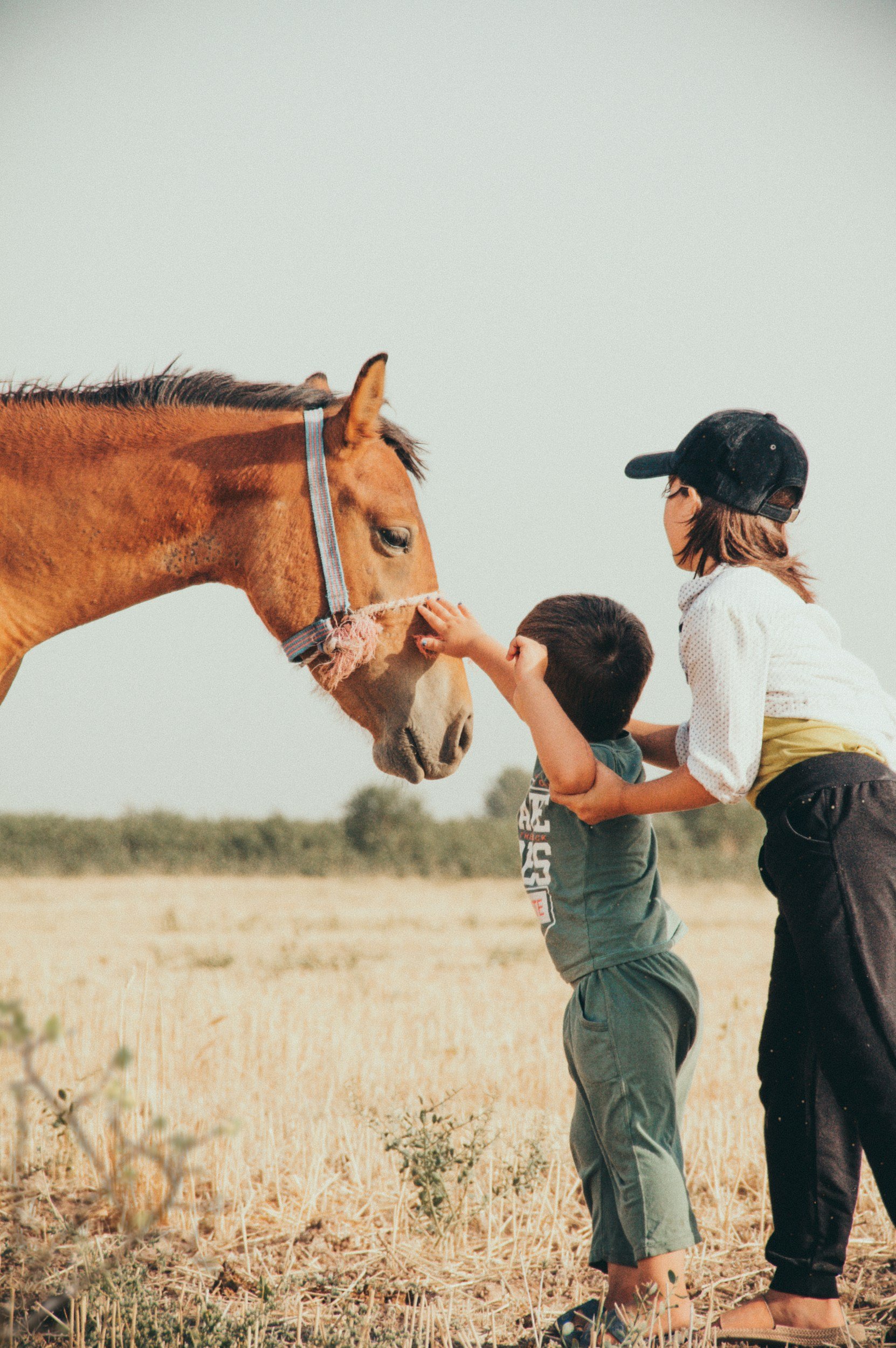
CO-REGULATION (Polyvagal Theory) The horse operates from its own well-regulated social nervous system. Polyvagal Theory explains the physiological signature of safety, connection, and learning-readiness is dynamic and contagious. The horse becomes calm when we are calm.
-
Positive Psychology
POSITIVE PSYCHOLOGY + PURPOSE SCIENCE The RISE curriculum integrates the VIA Character Strengths framework, Self-Determination Theory, CASEL SEL competencies, and purpose science (Burrow / PSiX at Cornell), grounding every activity in peer-reviewed research. Strengths are not what you are good at. They are what energizes you when you use them. The horse reveals them.
-
Mindful partnerships
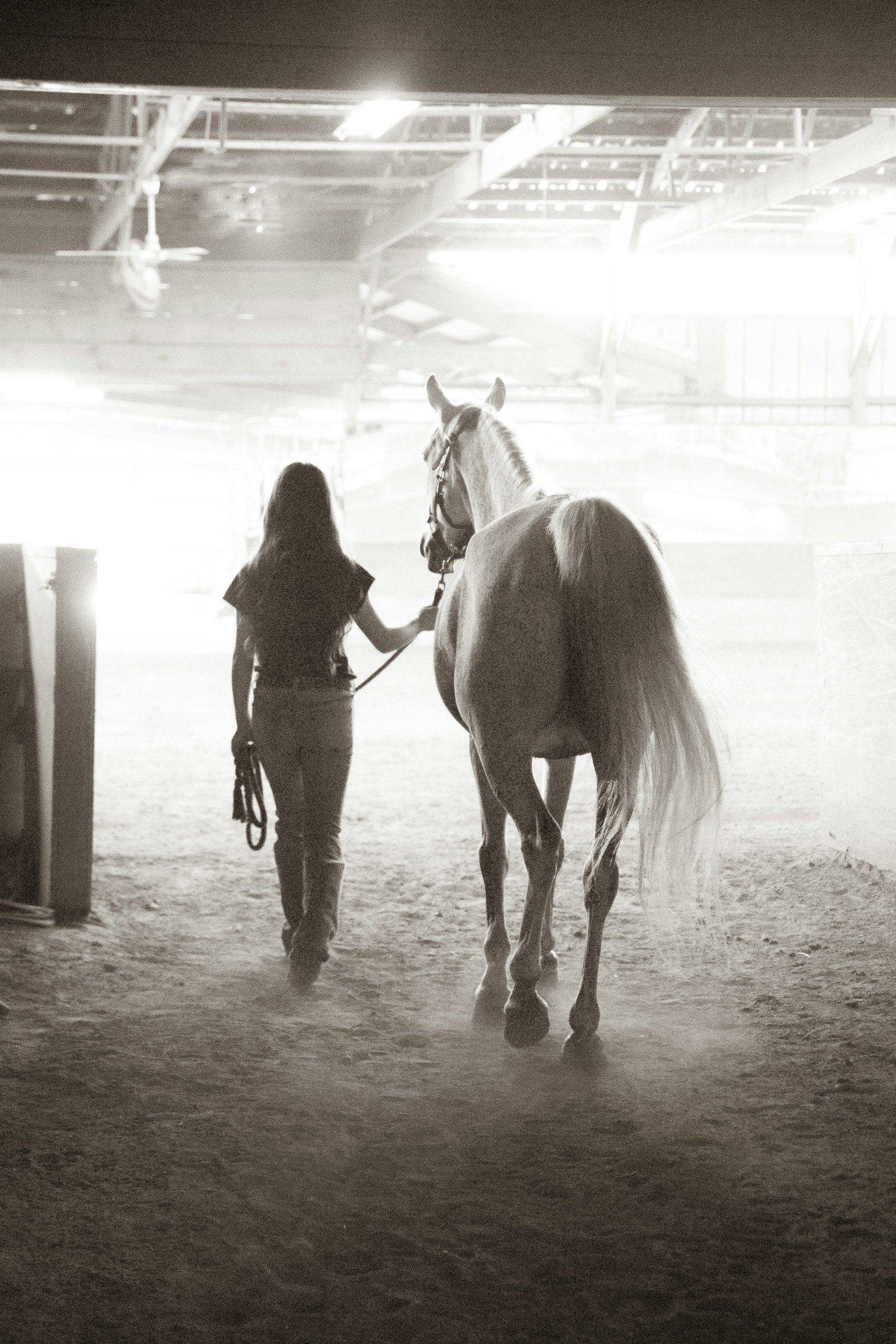
HONEST BIOFEEDBACK Horses are prey animals whose survival has always depended on accurate, real-time reading of the physiological states of beings around them. They respond to what is true, not what is performed. Participants cannot fake calm, perform confidence, or mask dysregulation. The horse's response is immediate and honest, disrupting habitual self-concealment and creating a different kind of self-awareness.
-

Honest Biofeedback
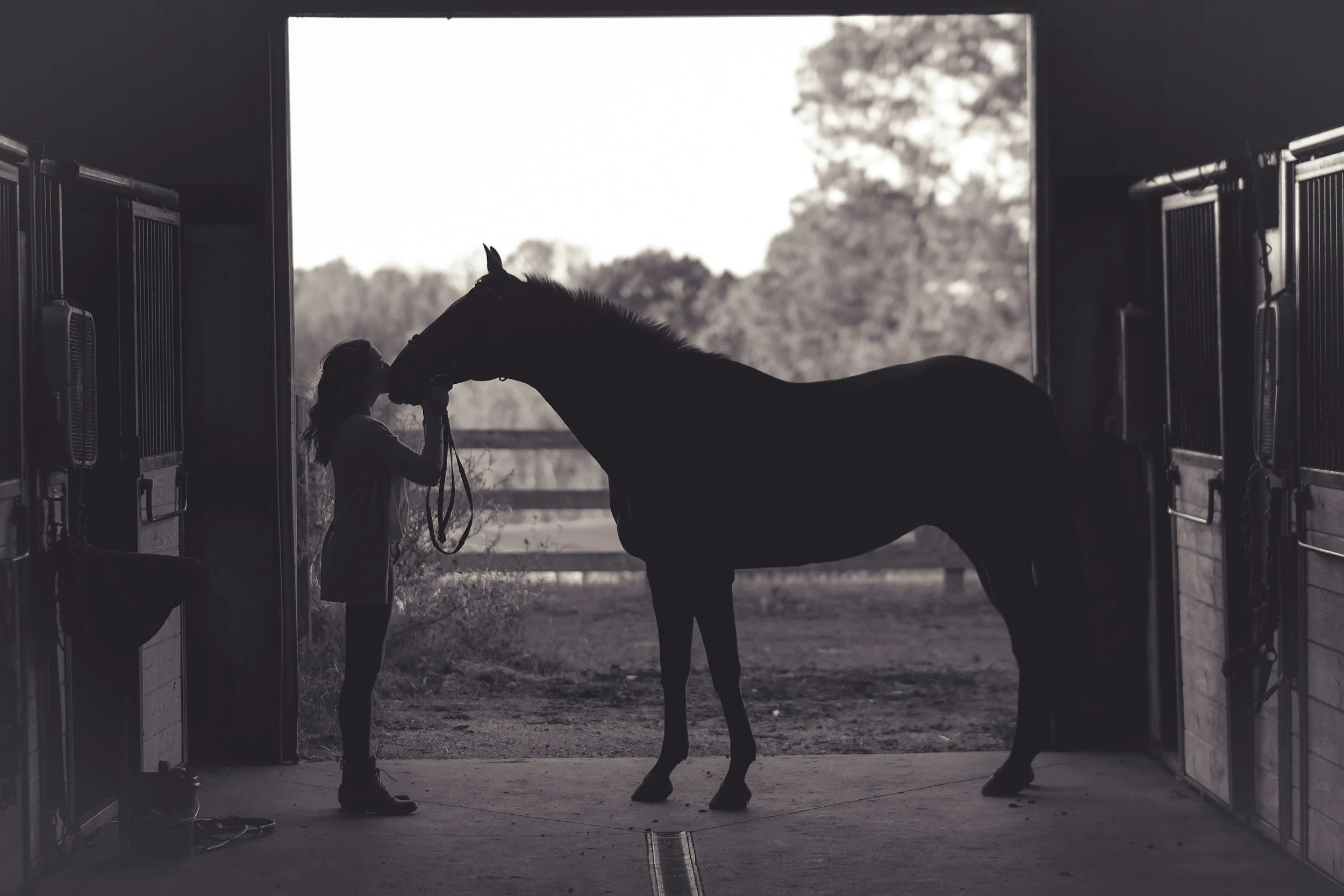
PARTNERSHIP-BASED HORSEMANSHIP Horses trained through positive reinforcement - through clarity, consistency, and the genuine experience of being heard - bring an entirely different quality of presence to the relationship. They are not bracing for correction. They are available, curious, and engaged. That quality of authentic engagement is precisely what makes the co-regulatory encounter possible. Partnership over dominance is not a preference. It is a prerequisite.
Our Program
RISE — Resilience, Identity, Strengths, Empowerment — provides the four developmental pillars through which all equine work is interpreted, facilitated, and integrated. These are not sequential steps. They are lenses, each illuminating a different dimension of who the participant is becoming. The full RISE arc is delivered across 8 weeks (or compressed into intensive formats), with each phase's horse work explicitly designed to surface the pillar in question.
Resilience
The capacity to return to self after disruption. Not toughness. Not the absence of feeling. The capacity to be moved without being swept away. Practiced in the presence of a horse through encountering the unexpected, staying regulated alongside a large animal, navigating setbacks without collapse. Horses do not reward performed stability, they respond to genuine groundedness.
Identity
Who am I when I cannot perform? What do I actually believe about myself? Horses respond to the participant's authentic internal state, not their carefully constructed self-presentation, making identity work visceral and immediate in a way that no classroom exercise or therapy prompt can replicate
Strengths
Strengths are not what you are good at. They are what energizes you when you use them. The curriculum surfaces strengths that participants may not have named — patience, leadership presence, emotional attunement, creative problem-solving — and makes them visible through the horse's response.
empowerment
Agency is the belief that your actions produce outcomes. For young people who have experienced environments where their actions did not produce reliable, safe results, agency is disrupted at the neural level. The horse relationship, where clear, authentic action produces consistent, immediate response, rebuilds that neural pathway through direct experience, not instruction.
Program Tracks
Spark (Ages 8-11)Building My Foundation. Children in this window are building the foundational vocabulary of emotional life. The SPARK track uses play-based learning, horse observation, creative expression, and simple somatic practices to expand emotional vocabulary, introduce the concept of strengths, and give participants the visceral experience: I am someone the horse chooses to be with.
01
Ignite (Ages 12-15)Discovering My Authenticity. The most turbulent developmental period: identity in formation, peer belonging paramount, the gap between performed self and authentic self widening daily. The IGNITE track is the core of Unbridled Rising's prevention mission. Advanced horse partnership, peer mentoring structures, explicit strengths identification, and experiential challenges that require genuine communication rather than control.
02
Empower (Ages 16-18)Living My Truth. Preparation for the most significant transition of young people's lives. Participants design and lead their own horse sessions, mentor younger SPARK and IGNITE participants using their signature strengths, set goals grounded in authentic self-knowledge, and connect individual growth to community purpose.
03
Ground (Ages 18-23)For Transitional-Age Young Adults. Foster youth aging out of care. IOP/PHP step-down participants. First-generation college students. GROUND targets the highest-risk period for the consolidation of adversity into chronic disorder. Nervous system stabilization as the foundational goal, the horse relationship as a non-clinical environment for practicing felt safety, and community building as a protective structure. Referral-based enrollment.
04
Who we serve:
Unbridled Rising serves youth and young adults ages 8–23 through four developmentally differentiated program tracks. Our programs are preventive and enriching in nature. They are not clinical treatment. Participants do not need a diagnosis to benefit. All they need is some support, a sense of self that is still taking shape, and a willingness to show up. Sliding scale pricing and scholarships are available. No young person is turned away for financial reasons. For young adults in or recently stepped down from clinical care (IOP/PHP), the GROUND track includes a facilitator-to-clinical-team communication protocol.
Get in touch
