
ABOUT US
Unbridled Rising is a 501c3 curriculum and training organization at the intersection of two parallel revolutions — one inside the human body, one inside the horse stable. We know nervous systems do not heal in isolation. They heal in relationship. And the horse, with instinctual capacity to read the emotional truth of every being in its environment, is among the most precise co-regulatory instruments available to human wellness. Simultaneously, the equine world is undergoing its own paradigm shift: from dominance-based horsemanship to partnership-based practice. A horse trained through trust and clarity rather than compliance and pressure brings an entirely different quality of presence to the human encounter.
Unbridled Rising codifies this intersection into a rigorous, modularized curriculum — the RISE curriculum — that any trained, certified facilitator can deliver with fidelity, outcomes measurement, and an ethical horsemanship standard that honors the animal as a genuine partner.
Our Values
Partnership Over Dominance: True confidence — in humans and horses — emerges through collaboration and mutual respect, not control or coercion. Partnership-based, positive reinforcement horsemanship is not a program feature at Unbridled Rising. It is a prerequisite. No UR program operates with horses whose primary training methodology is dominance-based. This standard applies to all program sites, all licensing partners, and all facilitator training.
Strengths-Based Development: Every participant brings unique capabilities that deserve recognition and amplification. The RISE curriculum surfaces strengths through direct experience — specifically, through the horse's honest, unfiltered response — not through self-report or adult assessment.
Authentic Wellbeing: Real resilience comes from understanding and accepting ourselves, not from external validation or performance.

Who we are
Susan Schaffler, MA, is the founder and director of Unbridled Rising. She brings a background in anthropology, public health, and strategic communications, with 15+ years of leading program development, partnerships, and strategic initiatives for startups, foundations, and nonprofits. Susan is completing PATH International Equine-Assisted Learning certification (Part 2 intensive, Fall 2026) and has accrued supervised facilitation hours at The Paddock in Atwater Village.
Susan's approach to Unbridled Rising is grounded in the conviction that the youth mental health crisis is not a shortage of clinical services; it is a failure of prevention infrastructure. Unbridled Rising is her solution to that gap: scalable, evidence-grounded, curriculum-based interventions that reach young people before crisis arrives and adults exactly where they are at. She designed Unbridled Rising’s RISE curriculum to connect themes of the individual body keeping score, finding resilience in discomfort, and redefining strength with her academic work in anthropology and cultural studies. Susan is also the author of the forthcoming memoir Side Effects May Include and writes about the science and practice of equine-assisted learning at Honest Ground on Substack. She received her BA in Anthropology from Columbia University and her MA in Cultural Studies at New York University.
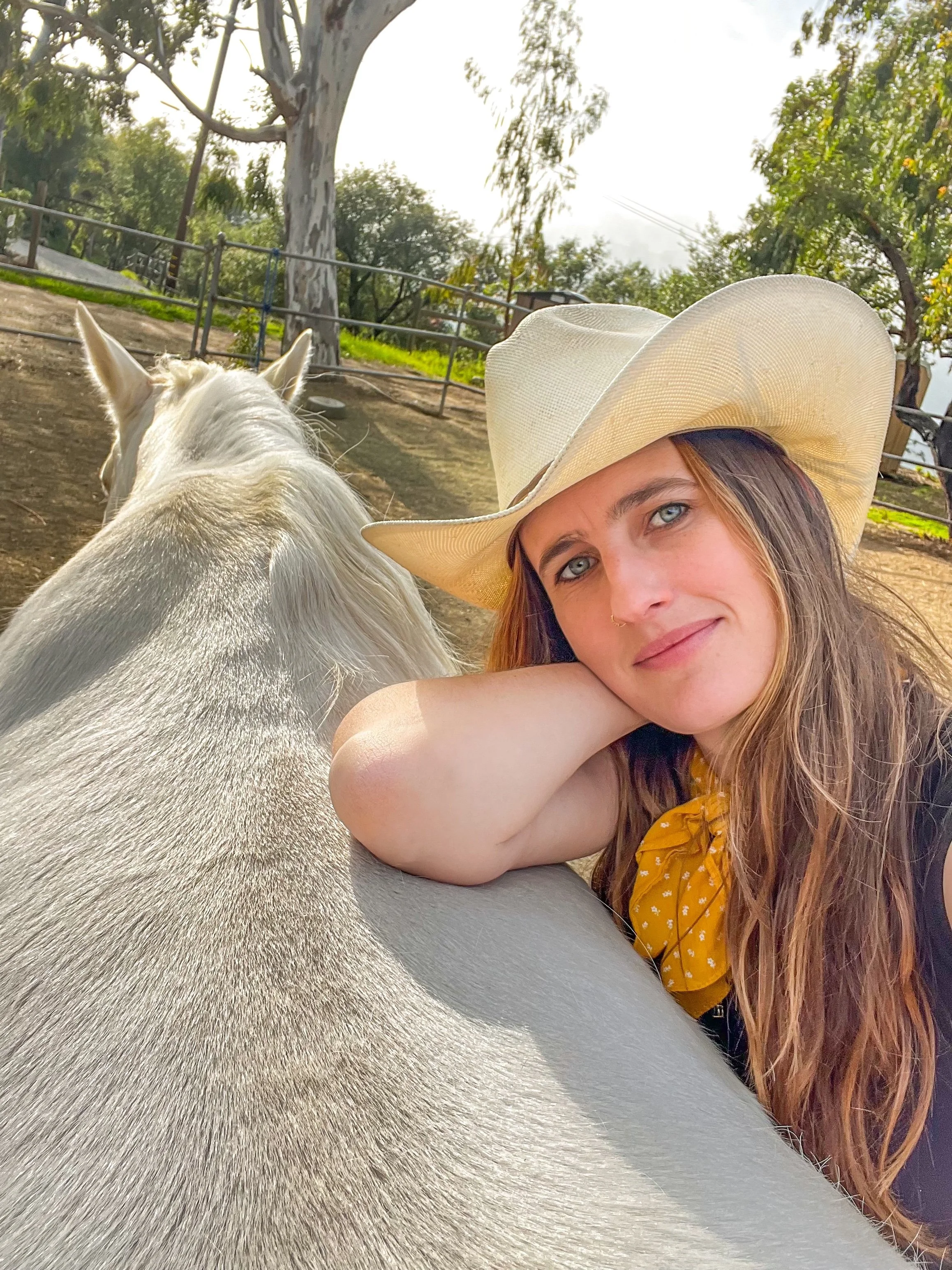
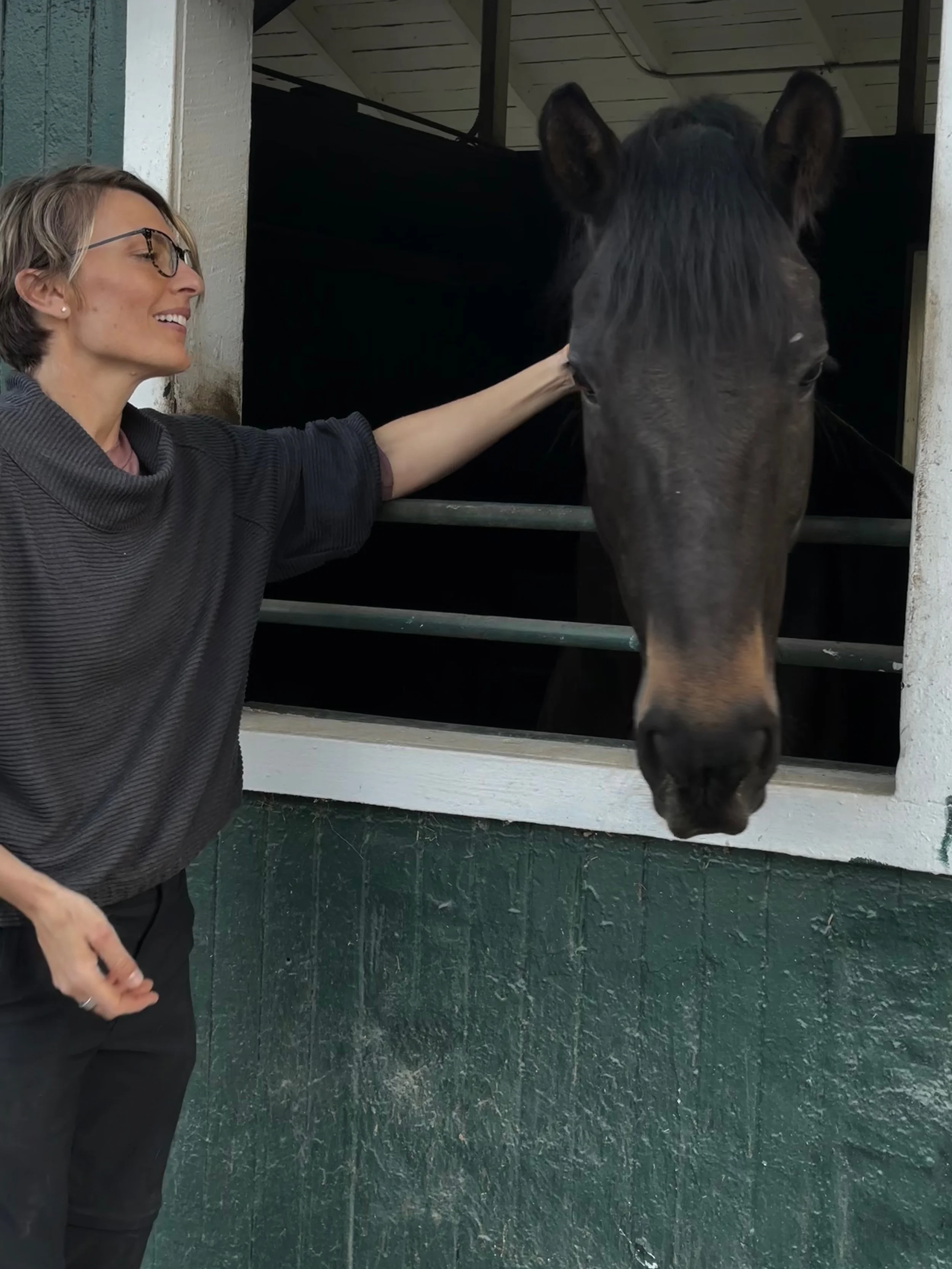
Emma Barnosky, PhD is an educator, Equine Assisted-Learning Facilitator, and Somatic Experiencing® Practitioner who bridges her scientific expertise and intuitive understanding of the horse-human partnership to help individuals and groups find deeper connection with themselves and the world around them.
At the core of her work is the understanding that humans, like horses, are hardwired to be social, connected creatures—we are biologically and spiritually meant to exist in relationship. However, cultural norms, upbringing, and life experience can create circumstances that get in the way of the authentic relationships that our nervous systems and psyches need which, in turn, can lead to anxiety, depression, pervasive loneliness (among other forms of dis-ease).
Emma and her equine co-facilitators take an experiential approach to dismantle such barriers effectively. Equine and somatic work are unique in that they do not require clients to talk about what has happened to them. Instead, they thaw barriers to connection through nervous system regulation, relational skill building, and refined self-awareness.
As Dr. Peter Levine has famously shared, "trauma is not what happens to us, but what we hold inside in the absence of an empathic witness." Emma and her equine co-facilitators serve as empathic witnesses for clients hoping to shift into this more connected and authentic way of being. She received her PhD from UCLA.
Frequently Asked Questions
-
Unbridled Rising serves youth and young adults ages 8–23 through four program tracks: SPARK (8–11), IGNITE (12–15), EMPOWER (16–18), and GROUND (18–23 — transitional-age young adults). Sliding-scale pricing and scholarships are available. No participant is turned away for financial reasons.
Our RISE Program is designed for EAS practioners who want to be part of bringing this industry to the next level.
-
At Unbridled Rising, we focus on strengths, not deficits.
Program elements are multi-sensory and choice-driven, with an emphasis on experiential learning. Facilitators are trained in trauma-informed practices, inclusive group facilitation, and de-escalation to meet a range of participant needs.
We believe in empowering youth to co-create community agreements and take an active role in shaping their experience. Social-emotional skill building, positive coping strategies, and self-reflection are woven throughout.
With horses as partners and peers as allies, Unbridled Rising provides a safe space for participants to build self-awareness, practice new ways of being, and experience belonging exactly as they are.
-
Three things set Unbridled Rising apart. First: the horsemanship standard. UR is designed with the perspective that horses are partners with agency, not a tool to be used for specific ends. Our curriculum is founded in the co-regulatory mechanism that exists between horse and human. Second: the curriculum architecture. The RISE framework is modularized, evidence-grounded, and measured with validated instruments. Third: the focus on facilitating other practitioners’ success in doing what they love and what they are good at.